
What Is a Constitutional Republic? A Plain-English Breakdown for Beginners
Dale Porter · September 13, 2026 · 4 min read
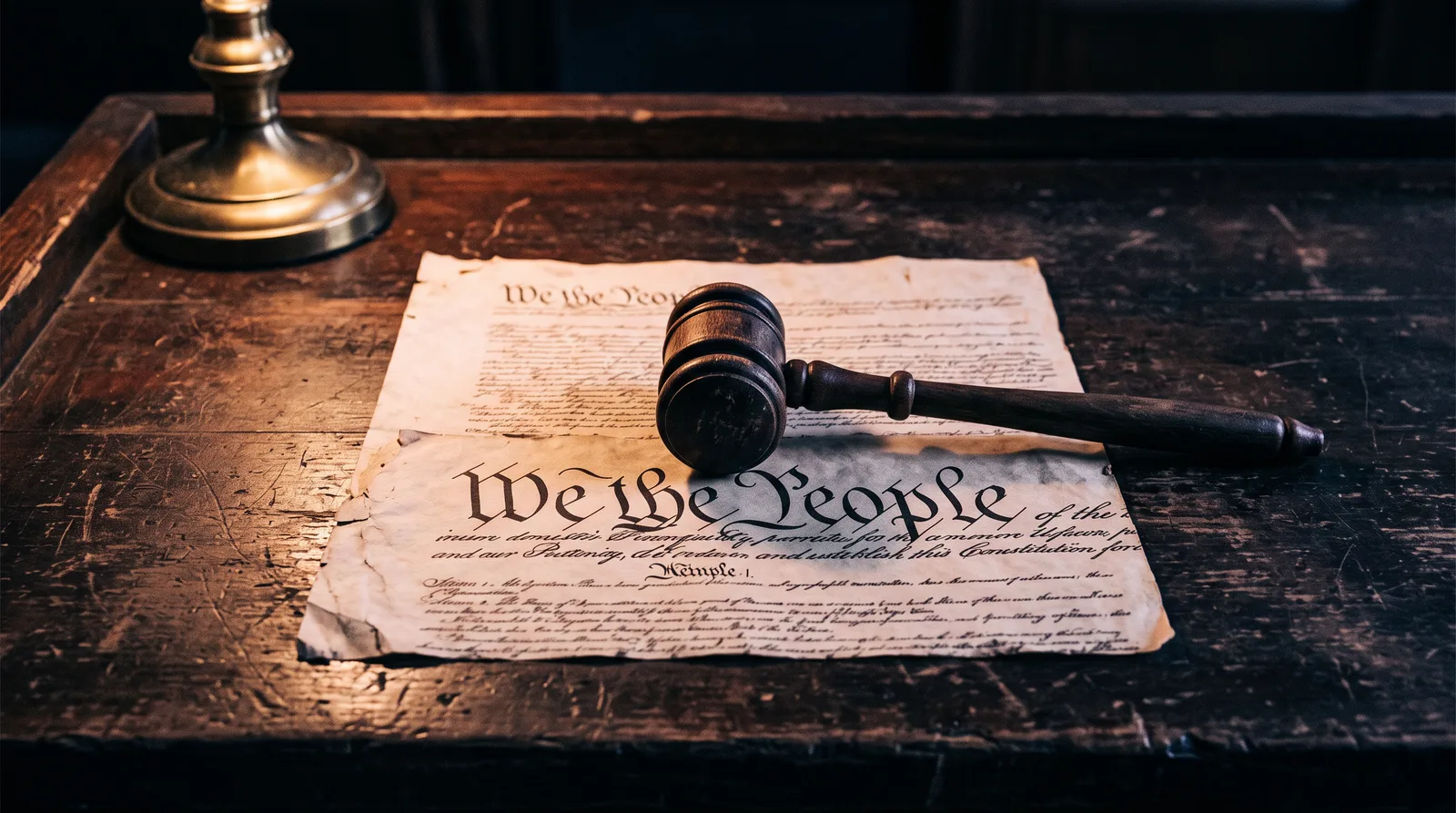
Ask ten people on the street what kind of government the United States has, and most will say "a democracy." That's not wrong, exactly — but it's incomplete in a way that matters a great deal. The full answer is a Constitutional Republic, and the difference between those two things isn't just a civics technicality. It's the whole ballgame.
Let's break it down, piece by piece.
Start With the Word "Republic"
Republic comes from the Latin res publica — "the public thing," or more loosely, "the common affair." A republic is any system where power is held by the people and exercised through elected representatives, rather than by a hereditary monarch or a single ruler.
So yes, a republic is representative. Citizens vote for people to make decisions on their behalf. That alone separates it from a direct democracy, where citizens vote on every law themselves — think ancient Athens, or a New England town meeting scaled up to 330 million people. The Framers knew direct democracy was impractical at the national scale. They also thought it was dangerous.
James Madison put it plainly in Federalist No. 10: pure democracies have historically been "spectacles of turbulence and contention" and tend to be "incompatible with personal security or the rights of property." His concern was the tyranny of the majority — the very real possibility that 51% of the population could vote to trample the rights of the other 49%.
Now Add the Word "Constitutional"
Here's where the republic becomes a constitutional republic, and why that modifier is doing enormous work.
A constitution is the supreme law of the land. It defines what the government can do — and just as critically, what it cannot do, regardless of what the majority wants.
Think of it this way:
- In a pure democracy, if 60% of voters want to ban a particular religion, they can.
- In a constitutional republic, they cannot — because the First Amendment removes that question from the voting booth entirely.
The Constitution doesn't just organize the government. It limits it. Certain rights are placed beyond the reach of majorities, legislatures, and even presidents. That's the whole point of a Bill of Rights. Those ten amendments don't grant you rights — the Framers believed your rights pre-exist the government. The Bill of Rights prohibits the government from infringing on them.
The Three Structural Pillars
A constitutional republic as the Framers designed it rests on three interlocking ideas:
1. Separation of Powers Legislative, executive, and judicial power are divided among three distinct branches — Congress, the President, and the courts. No single branch can do everything. This wasn't an accident of design; it was the whole design. Power concentrated in one place is power that can be abused.
2. Federalism Power is also split vertically — between the federal government and the states. The Tenth Amendment reserves to the states (and to the people) all powers not specifically delegated to the federal government. The Framers didn't create a single all-powerful national government; they created a layered system where states serve as a check on federal overreach.
3. Rule of Law, Not Rule of Men No person — not the President, not a senator, not a Supreme Court justice — is above the Constitution. The law governs everyone equally. This is the philosophical opposite of a monarchy or dictatorship, where the ruler's will is the law.
So What's the One-Sentence Definition?
Here it is:
A Constitutional Republic is a system of government in which elected representatives exercise power on behalf of the people, but are strictly bound by a written constitution that protects individual rights from majority overrule.
Every word in that sentence is load-bearing. Elected — not inherited. Representatives — not direct mob rule. Strictly bound — not suggestions. Written constitution — not unwritten traditions that shift with whoever's in charge. Individual rights — not just the rights of the group, the majority, or the state.
Why This Distinction Still Matters
When people call America "a democracy" without qualification, they accidentally erase the constitutional limits that protect minorities from majorities, individuals from government, and present majorities from dismantling rights that future minorities will need.
Understanding this distinction isn't a trivia exercise. It's the foundation for every other conversation about American government — about what Congress is allowed to pass, what the President is allowed to do, and what your rights actually are when someone in power decides they'd prefer you didn't have them.
That foundation is exactly what we build in my courses. If this clicked for you and you want to go deeper — into the specific articles and amendments, into how this model compares to socialism and communism, or into what genuine constitutional restoration looks like — you're in the right place.
The republic the Framers built was remarkable. Understanding it is the first step to defending it.