
Republic vs. Democracy: What's the Actual Difference and Why Did the Founders Care So Much?
Fraternal Order of Continental Sentinels Constitutional Republic Studies · September 13, 2026 · 4 min read
The Word They Chose — and the One They Didn't
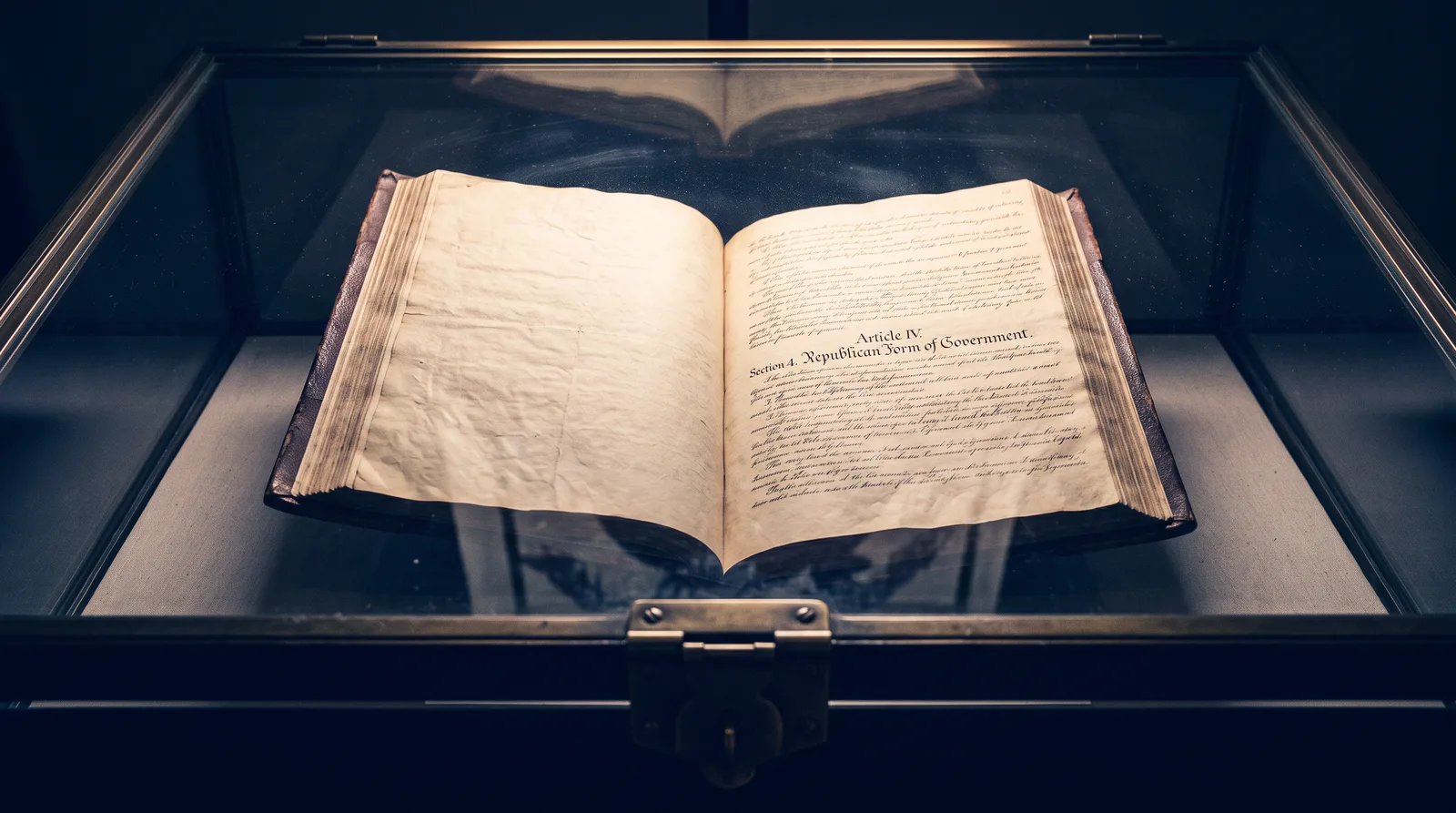
Pull out Article IV, Section 4 of the Constitution. It reads: "The United States shall guarantee to every State in this Union a Republican Form of Government."
Not a democratic form. Not a popular form. Republican.
That wasn't a slip or a placeholder. It was a deliberate, argued choice made by men who had spent years reading Greek and Roman history, studying the collapse of ancient city-states, and living through what unchecked popular passion could do — mobs, property seizures, debt cancellations, and the eventual slide into tyranny. When they reached for a word, they meant it precisely.
So what did they mean?
What "Pure Democracy" Actually Means
A pure democracy, in the classical sense, is simple: the majority decides, directly, and the decision is final. Every eligible citizen votes on every question. Whatever the majority wants, the majority gets.
No filter. No delay. No higher law standing in the way.
The Framers knew this model from the ancient Greek city-states, particularly Athens. And they were not impressed by the long-term results. James Madison, in Federalist No. 10, wrote that pure democracies have "ever been spectacles of turbulence and contention" and are "incompatible with personal security or the rights of property."
That's a strong statement. What was he worried about?
Faction. Specifically, a majority faction using its numbers to legally strip rights from a minority. If 51% of the people vote to confiscate the property of the other 49%, and there's no law above the vote, it happens. Democracy, by itself, provides no protection against it.
What a Republic Actually Means
A republic introduces several structural safeguards that pure democracy doesn't have.
1. Representation, not direct voting. Citizens don't vote on laws directly. They elect representatives who deliberate, debate, and vote on their behalf. This creates a layer of reason between raw public passion and actual law. Madison argued this "refines and enlarges the public views by passing them through the medium of a chosen body of citizens."
2. Rule of law, not rule of the majority. In a republic, there is a supreme law — the Constitution — that no majority vote can override. Even if every single citizen wanted to silence a particular speaker, the First Amendment holds. The will of the majority is real and powerful, but it operates within boundaries it cannot erase on its own.
3. Protection of individual rights. Because the Constitution sits above ordinary legislation, certain rights are placed outside the reach of popular vote. Your right to a jury trial, your protection against unreasonable searches, your freedom of conscience — these don't depend on whether you're popular.
4. Distributed power. The Framers split authority among three federal branches and then again between the federal government and the states. No single person, body, or momentary majority can consolidate enough power to act unilaterally. Every branch has tools to check the others.
Why the Distinction Still Shows Up in Law Today
This isn't museum history. The republic-vs.-democracy distinction shapes live constitutional questions right now.
When the Senate filibuster debate comes up, both sides are actually arguing about this tension — how much should a bare majority be able to do? When courts strike down a popular law as unconstitutional, critics call it "anti-democratic." Technically, that's correct — and in the Framers' design, that's the point. The judiciary is supposed to be insulated from majority pressure precisely so it can enforce the Constitution against popular but unconstitutional legislation.
The Electoral College debate follows the same fault line. The system was designed to give smaller states a structural voice and to require winning coalitions that are geographically broad — a republican mechanism to prevent a densely populated region from dominating a sprawling, diverse nation.
Every one of these debates becomes clearer once you understand what the Framers were building and what they were building against.
The Phrase Worth Remembering
Benjamin Franklin, leaving the Constitutional Convention in 1787, was reportedly asked what kind of government the delegates had produced. His answer: "A republic, if you can keep it."
That "if you can keep it" has always done a lot of work. A republic requires active maintenance — an informed citizenry, representatives who actually represent, and a culture willing to defend the rule of law even when the majority finds it inconvenient.
Understanding the difference between a republic and a democracy isn't a trivia question. It's the foundation for understanding almost every constitutional argument that matters. If that foundation interests you, there's a lot more to explore — and we're just getting started.