
The Bill of Rights Explained: What Each of the First 10 Amendments Actually Protects
Dale Porter · September 13, 2026 · 5 min read
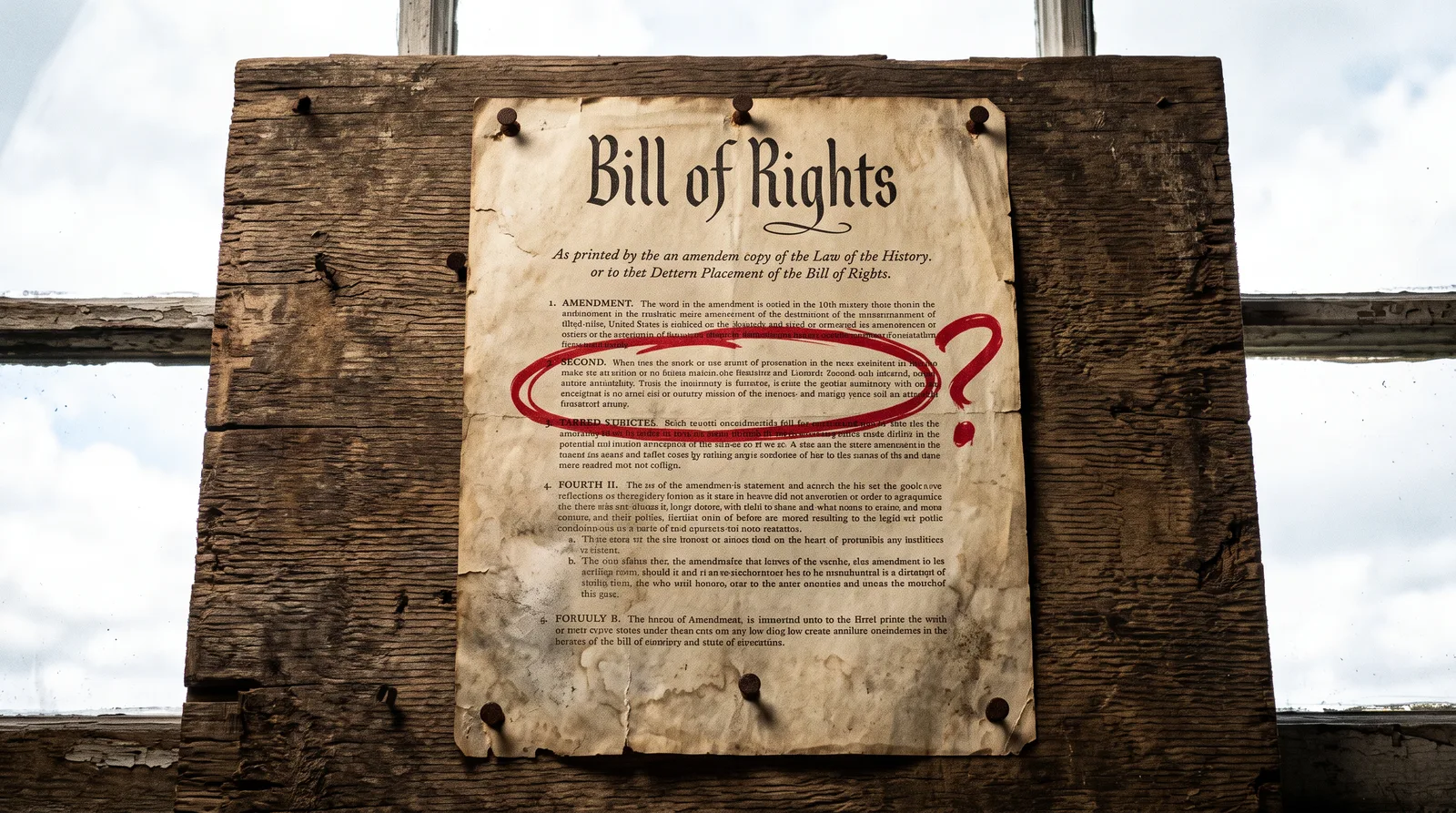
The Bill of Rights was ratified in 1791. That's over 230 years ago. And yet most people couldn't tell you, off the top of their head, what the Third Amendment does — or why it was considered urgent enough to carve into the supreme law of the land.
That gap isn't your fault. Somewhere between civics class and adulthood, these ten amendments got buried under legalese, political argument, and selective quoting. This post fixes that.
Below is every amendment in the Bill of Rights — one plain-language sentence each, followed by a brief explanation of why it still matters to you right now, in your daily life.
First Amendment — Speech, Religion, Press, Assembly, and Petition
The government cannot silence your speech, tell you what to believe, shut down the press, prevent you from gathering peacefully, or stop you from complaining to your representatives.
This is the most cited amendment for a reason. It doesn't just protect popular speech — it protects speech that makes people uncomfortable. It also means the government cannot establish an official religion or punish you for practicing yours (or none at all).
Second Amendment — The Right to Keep and Bear Arms
As a citizen, you have the right to own and carry firearms, and the government cannot take that right away.
The Framers saw an armed citizenry as a safeguard against tyranny — both foreign and domestic. However it's interpreted in ongoing legal debates, the core protection belongs to the individual.
Third Amendment — No Quartering of Soldiers
The government cannot force you to house soldiers in your home in peacetime, and even in wartime it requires a law to do so.
This one sounds ancient, but it speaks to a foundational principle: your home is yours. The Framers had lived under British soldiers literally moving into their houses. They made sure it could never happen again by default.
Fourth Amendment — Protection Against Unreasonable Search and Seizure
The government cannot search your home, car, papers, or belongings — or take your property — without a specific warrant based on probable cause.
This is the amendment standing between you and arbitrary government intrusion. It's why police generally need a warrant. "Your papers, please" is not supposed to be how America works.
Fifth Amendment — Due Process, Double Jeopardy, Self-Incrimination, and Just Compensation
You cannot be tried twice for the same crime, forced to testify against yourself, imprisoned without proper legal process, or have your property taken by the government without fair payment.
When someone "pleads the Fifth," this is what they're invoking. But this amendment does far more — it's a whole package of protections ensuring the government has to play by the rules before it can do anything to you.
Sixth Amendment — The Right to a Fair and Speedy Trial
If you're accused of a crime, you have the right to a fast, public trial by an impartial jury, to know exactly what you're charged with, to confront witnesses against you, and to have a lawyer.
No secret courts. No indefinite detention without trial. No being convicted without knowing why. These were radical ideas in 1791. They remain essential today.
Seventh Amendment — Jury Trials in Civil Cases
In federal civil lawsuits involving more than $20, you have the right to a jury trial, and a jury's factual findings cannot simply be overturned by a judge.
Civil cases — disputes between private parties over money, property, or injuries — are just as serious as criminal ones. This amendment keeps ordinary citizens, not just judges, in the room where decisions get made.
Eighth Amendment — No Cruel and Unusual Punishment
The government cannot impose excessive bail, excessive fines, or cruel and unusual punishment.
This amendment doesn't define "cruel and unusual" precisely, which is why courts still debate it. But the intent is clear: punishment must fit the crime, and the government cannot torture or brutalize people, even those convicted of serious offenses.
Ninth Amendment — Rights Not Listed Are Still Rights
Just because a right isn't written in the Constitution doesn't mean you don't have it.
This one gets overlooked constantly. The Framers knew they couldn't list every human right. So they wrote an amendment that explicitly says: this list is not exhaustive. The people retain rights beyond what's written here.
Tenth Amendment — Powers Not Delegated Stay With the States and the People
Any power the Constitution doesn't specifically give to the federal government belongs to the states — or to the people themselves.
This is the foundation of federalism. The federal government was designed to have limited, defined powers. Everything else was supposed to stay closer to home — with your state, your community, or you personally.
Why This Still Matters
These ten amendments weren't written as historical decoration. They were written because the Framers had watched governments — including the one they just fought — abuse every single one of these rights. They built these protections in specifically because they knew power, left unchecked, always reaches for more.
Knowing these ten amendments isn't just trivia. It's the baseline for every conversation about what your government can and cannot do to you. And that's a conversation worth knowing how to have.
If you want to go deeper — into the actual text, the history behind each clause, and how these rights interact with modern law — that's exactly what my Plain Text Constitution course is built for. Every article, section, and amendment, in plain language, one piece at a time.